

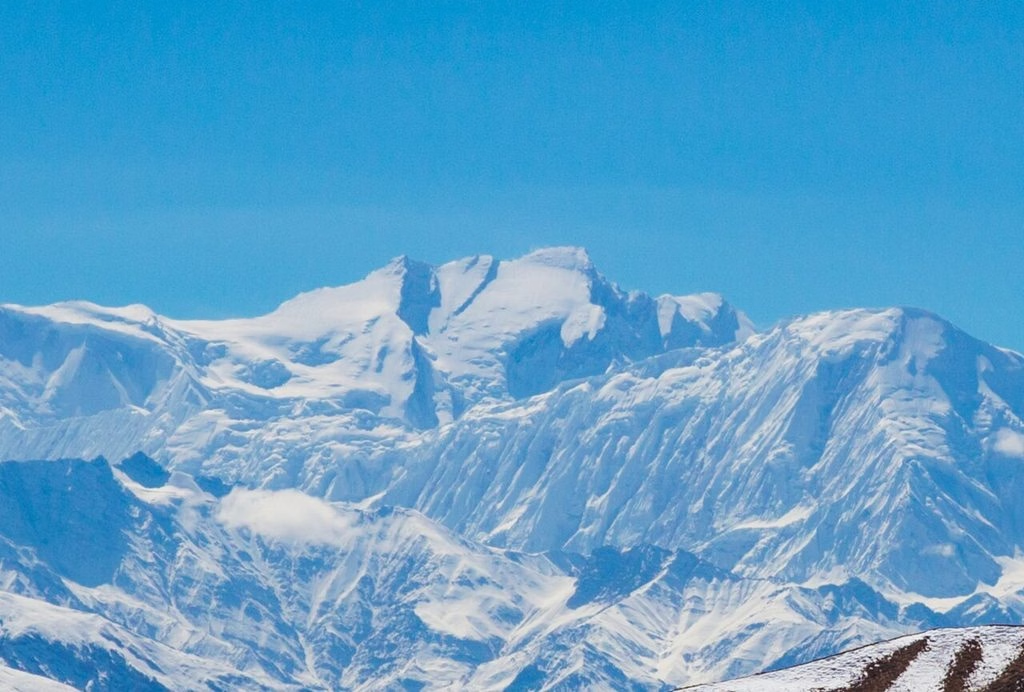
In this day, everyone knows there are women mountain climbers. The tale of Junko Tabei (first woman to climb Mount Everest) is so generally available as to appear on ESL assessments at my school. But back in the 70’s, it was still somewhat rare for women to join top-flight male expeditions. Veteran mountaineer Arlene Blum had been buffeted by both overt and subtle opposition to her mountain climber’s claim to gender equality. This motivated her to create the all-women’s Himalayan expedition that would be called American Women’s Himalayan Expedition to Annapurna, to the most dangerous of the Himalayan Peaks. Later she wrote a book, Annapurna: A Woman’s Place, to tell the expedition’s story.
According to another well-known climber, Ed Viesturs, in The Will to Climb, “Blum conceived of her expedition not just as an adventure but as a feminist manifesto.” Indeed, in her book, Blum claims, “There were many expeditions I was not allowed to go on,” because of entrenched sexism in the mountaineering establishment. But challenges to Blum’s project would come not only from men who wanted to keep the sport male. The team of female climbers worked for two months to scale Annapurna, facing challenges including weather, money, supplies, and perhaps most unexpectedly, staffing. Not just female climbing but female leadership was on trial, and Blum felt this keenly.
I did not expect to like this book, but it seemed to shed light on an essay I’d been working on about climbing Mount Fuji with my daughter last summer. Surely, I thought, climbing by women must have a history. I found the book in my usual way: cruising through the library catalog with keywords, this time “women mountain climbers.” So I gave the book a try. A bunch of women mountain climbers going to the Himalayas on what appeared to be a completely successful climb up an extremely difficult mountain seemed like it would just be a lot of triumphalism and women’s lib proclamations. But if I went with them, I reasoned, I could read between the lines, and find out about the all-woman dynamic.
So I Started Reading Annapurna with Moderate Doubt
I should not have underestimated Arlene Blum. From reading the book one learns much about the complexity she dealt with. And not a little about the soul of the mountain climber.
What I sought in the book was the promise that it would talk about women working with women, which would connect with my essay about Fuji, and honestly connect with my work at an elementary school. I decided to give Blum a chance. My generation, Gen X, has been said to be the “I’m not feminist but” generation. Perhaps that was a knee-jerk response to the imperious attitude of 70’s feminists.
My Mother Was the First Feminist I Knew
I was used to a lot of feminist talk from my mother, who back in the ’70s was a founding subscriber to Ms. Magazine. But I didn’t exactly take feminists seriously. I had concluded very young that they were nothing like me and their problems and their arguments did not resonate.
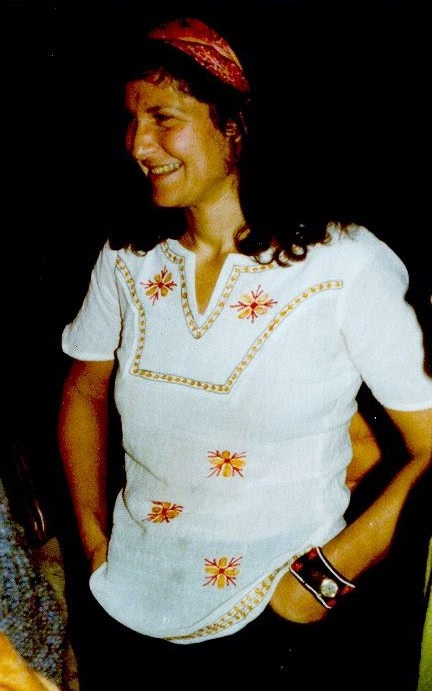
The very mention of Ms. takes me back. The year is 1978. My mother is an executive at the State Capitol. I am in 7th grade. The question of the subtitle on this book: a woman’s place … is an open one to me. The truth is I am not affected by barriers on my achievement based on gender. The reason is pretty simple. Attempts at gender equity were in place at my school. When you were picked for teams everyone played and the leaders had to pick a boy and a girl with each draft round. I was often picked quite early, because at least for a girl I was a decent athlete.
Perhaps another reason feminism didn’t resonate was that my ambitions were simple. I wanted to be popular and I wanted to be beautiful and I wanted to be loved. Feminism wasn’t in a position to help me.
Since any achievement I made would be used as proof of Mom’s Female Hegemony Theory, the only rebellion I could make (and California, particularly Northern California, is a place dedicated to rebellion) was to get married young. And I did.
But no woman is an island. Feminism stayed in my view as it privileged women who were not like me, as it gave them primacy of place in literature and media, as taking care of children, whether personally as a housewife, or professionally as a teacher, was given minimal scant respect through my young woman years.
I soldiered along doing my schtick and ignored my marginalization. It didn’t really matter if feminists were getting all the glory, I reasoned. I was building a family. I was creating the future of America one child at a time.
I figured I had the better end of the bargain.
And with this history, after climbing Mount Fuji with my daughter last July, I came to Arlene Blum’s book. I was a grandma now, and I figured I could look into feminist fancies without any emotional risk, that is, without having to actually meet anybody who would think I was some kind of loser. Without having to actually talk to anybody. Perhaps I could learn something. I would give it a chapter.
Diving into Annapurna
And now I’m on page 115. The book has become my favorite of the stack by the dining table. Even though I have to admit I don’t really like these women, the young precise doctor, the 50-year-old ‘this is my last timer,’ the ambitious leader, Blum, who wants to be fair but wants to be good even more than she wants to be fair. You have the young members who try to respect their elders but it’s so hard, the supply chain manager who wants to lead herself (shades of Mr. Christian?) and those searching for the glory of climbing, or of out-climbing the others. No, there’s just about none of these women that I would want to meet.
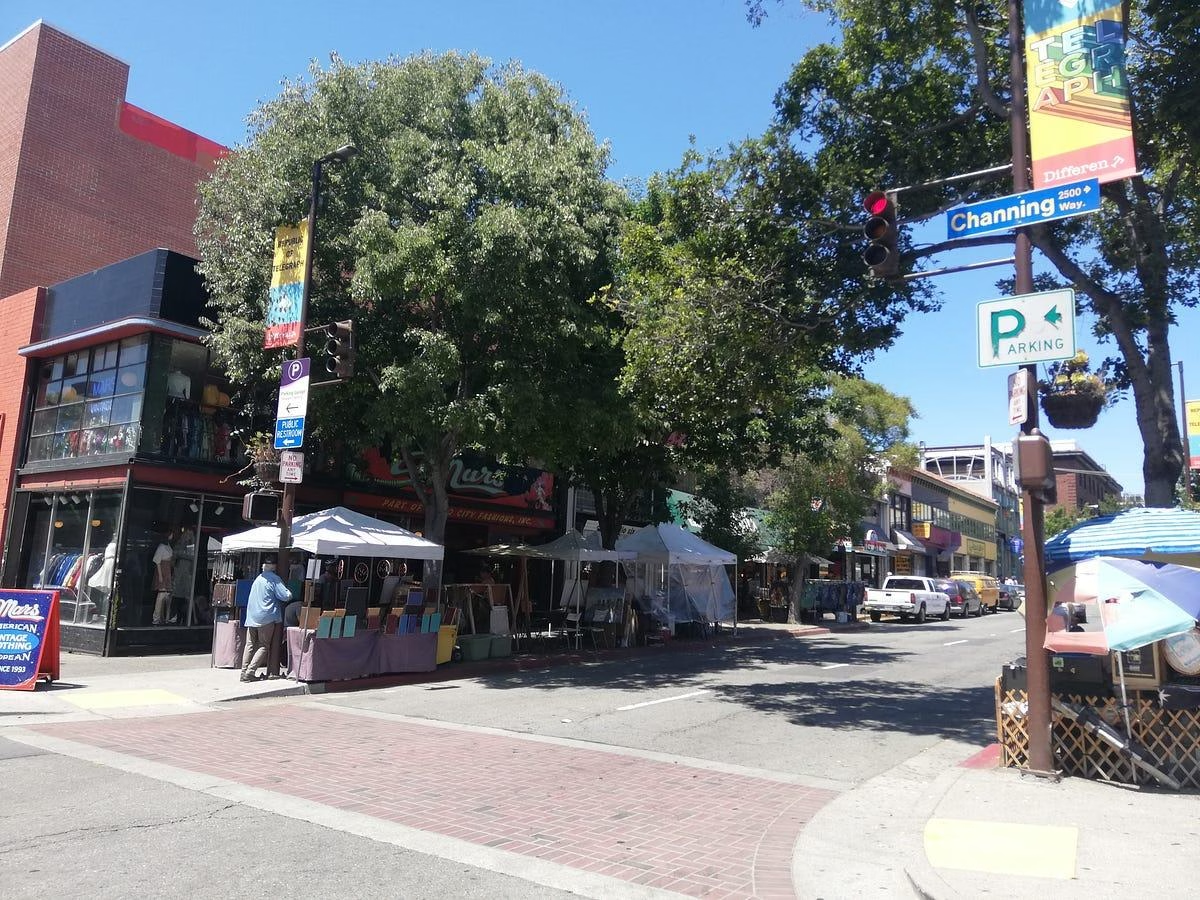
But since the expedition was founded in Berkeley, California, the truth is I know these people pretty well as types. I was born in Berkeley in 1966. If I closed my eyes, I could see them, bell bottoms and round glasses, walking down Telegraph Avenue. They were my mother’s friends and colleagues. They were the Free People, as I thought of them, the Californians of the 70’s. A modern day answer to the Founding Fathers, these free people were seekers of a liberty beyond anything dreamed of before. The clothing line, Free People capitalized on the ethos – but Berkeley in the 70’s was at the heart of all this.
The book’s got your recognizable personalities. The Dragon Lady, the young meek one that seems almost ready to dry up and blow away, the ones who don’t think about other people’s feelings, cliques of two and three gossiping…the leader who is forbearing and unappreciated. Of course once in a while, they all tell her that they appreciate her and she half believes them.
I’ve been there, too, in my own all-woman cadre at the school.
The mountain is there hanging over this group of women and their Sherpa for chapter after chapter. It congeals into a face, a ridge, a bowl, a base camp, Camp II and III. Avalanches roll down with terrifying regularity. Blum is called Bara Memsahib, Boss Female Sahib, by the Sherpa. She wears this mantle with incomplete comfort. But often, in my experience anyway, not feeling totally comfortable leading is part of being a good leader. The yoke of leading the expedition is heavy. So much is riding on this for Blum.
Avalanches and Sherpas
About 400 porters have helped the women carry their materials to base camp. The porters carry all the gear and all the porters’ food. Porters carrying heavy loads eat a lot and somehow not enough food was purchased. The expedition has to shop for food in small villages along the way. There’s talk of extra crampons misplaced, of distributing extra gear to the Sherpa in a contract renegotiation. And then they arrive at base camp.
Relations between the memsahibs and the Sherpa become dicey. The Sherpa want to climb when they want to climb and they don’t when they don’t and they want to carry loads but then they don’t. Judgments are questioned and there are threats of people leaving, both memsahibs and Sherpa, not to mention the outrage of the Sherpanis, female Sherpas who were supposed to be coming along to begin to learn to climb, which in their culture is not done by women. The Sherpanis wind up angry at the memsahibs about job duties and payroll. At the end of the disagreement the Sherpanis quit, and one actually throws a rock at Blum and hits her.
Blum is shocked. Trying to carry women’s equality into the Himalaya is harder than it looks. In fact it’s downright unappreciated.
You have to have read other expedition stories to appreciate what Blum has done in her writing here. She has dissected the female group dynamic. Picture women working together as we have for thousands and thousands of years, in schools, fields, hospitals, town squares, churches. This is the thing: some days go better than others.
For all the difficulty that the memsahibs are having with the Sherpa, never before in any climbing memoir have I seen such detail lavished on the Sherpa staff, and even the porters who accompany Himalayan expeditions to base camp. The two groups are distinct. Porters carry loads and go home when the expedition reaches base camp. Sherpa climb.
As I noted in my recent review of Tenzing, the Sherpa have long been indispensable to Himalayan mountaineering. But they are not merely climbers and adventurers. They are skilled professionals with their own interests, traditions, and expectations. Blum gives Sherpa far more airtime than I’ve seen in other memoirs. One still doesn’t really feel they know them – but the reader does sense that Blum tried harder than most expedition leaders to understand her hired labor and their cultures.
By the time I’ve reached page 130 the difficulty between the Memsahibs and the Sherpa has subsided. They’re building the supply train to get to the top of the mountain and in order to do that they must climb a formation called The Dutch Rib. It’s a ridge that begins in a wall of solid ice and travels along until it becomes a naked spine with dramatic drops of 1,000 feet on either side. Covered by snow, the Dutch Rib is described as difficult to climb but, for roped climbers, not dangerous.
The word dangerous must be considered relative here.
To climb it, a mountaineer uses crampons and ascends up an ice wall. This is technical work that requires skill. More dangerous hazards are the many crevasses that criss-cross the glacier at somewhat unpredictable locations. Mountaineers can fall into the cracks and if they don’t get out quickly can die in several ways. Generally they are wearing ropes that keep them from falling all the way down, but if no one sees them fall in they must pull themselves back out by climbing, which can be tricky.
The mountaineers treat this type of danger as not worthy of serious concern, although Blum worries about it. She is responsible for everyone on the expedition and what’s more she’s responsible for the public view of the expedition. She is keenly aware that it is an all-female expedition. Anything that goes wrong could be used to suggest that women climbers are not qualified, are not strong enough, not brave enough, not anything enough. It’s a burden she carries, this worry about the whole race of women and how they will appear if the climb doesn’t go well.
The most profound and threatening danger is from avalanches. Many climbers who die on the Himalayan peaks die buried in falling snow and ice. It’s not just statistically more dangerous than a fall, it’s scarier, like drowning, except colder. Falling off a cliff is quick and clean. Avalanches are the real horror. Especially since, except for route selection, you can’t control avalanches at all.
And about the time that the climbers are establishing Camp II of five, there is a snow storm. It is a blizzard capable of dumping so much snow on the tents that the climbing team must come out every half hour to shovel them off and then dive back in. After that, real trouble: Avalanches by the minute.
Annapurna is considered the most dangerous Himalayan peak mostly because of the avalanches. There is no way to climb this peak without crossing avalanche fields. The mountain seems to be made up of sluices down which thundering death roars at irregular intervals which cannot be predicted. Some mountaineers say that the avalanches are more likely in the afternoon when the sun is shining. They’re also more likely after a snowstorm. At one point one of the members says they don’t think there’s any “best time” for the avalanches; they might as well just climb and take their chances.
Blum doesn’t agree. Woman-like, safety is important to her and she says climbing immediately after the storm is out. But it’s soon pretty clear that there will be no climbing for a day or two, as avalanches begin roaring left and right. The sites of the camps are generally protected from avalanche danger by location choice, but you can’t be completely sure. The climbers hunker in the tents and try to stay calm.
Summiters
By the time the first team reaches Camp V, at over 24,000 feet, the problems with the Sherpas have been temporarily mended. Two members, as Blum calls the female mountain climbers, and two Sherpas make their way toward the summit of Annapurna. This was not Blum’s original plan, since she originally wanted the first summiters to be an all-woman team. But the women who actually were most able to summit wanted Sherpa support. And they were up at Camp V, where Blum, who was lower on the mountain, could not dictate their actions.
Vera K and Irene are on the first summit team with two climbing sherpa, Chewang and Mingma. The Sherpa spend some time leading the climb, and go without oxygen. Chewang, moreover, is an optimist who encourages Irene, “Slowly going, no stopping, I think success” as they approach the summit. The victorious summit is sweet; flags are planted. Irene writes in her diary that “I have climbed Annapurna and survived.” It seems a miraculous moment.
Blum’s anxiety is relieved when she finds the team has succeeded in reaching the top. But their success does not end the expedition. Blum has arranged another group of summiters, perhaps following the female tradition of inclusiveness. Everyone who wants to summit should be given a chance!
This despite some women wanting to go down now, with a “bag the peak” and leave expedition ethos. As Mingma puts it, “Let’s go to Kathmandu and have a party.”
The second summit party starts with four members, plus one or two Sherpas. But one of the four members now has frozen feet. She will not go up. That leaves the second summit team with only three members. Then another member decides she must drop out.The remaining two members, Vera W. and Alison, argue with her, but she is firm: she is not going.
Radioing to Camp IV, it turns out that the Sherpa are all coming down. There will be no Sherpa support for the second pair of summit climbers.
Blum hopes this will end the second summit plans, but it does not. The leader writes on pg. 212, “When I learned there was now no Sherpa support at all for Vera W. and Alison, I decided to make a last attempt to talk them out of continuing.” She is communicating with them by radio, because the two climbers are at Camp IV and Blum is at Camp II.
Blum speaks: “I’d really rather you wouldn’t go up there without Sherpa support …”
Vera W. and Alison respond:“We want to at least go up and take a look at the center peak. Maybe we’ll just bring back the loads.”
Blum feels misgivings, but they’re adults and have the right to make this decision. Still, she is plenty worried. She knows that without support, problems of various types are more likely. The Bara Memsahib believes very strongly in granting people freedom. And if there’s any characteristic that is evident from this memoir of a group of working women, it’s that they don’t always agree, and they’re rather slow to compromise. In other mountaineering literature, including Ed Viesturs’s The Will to Climb, I’ve encountered plenty of rebellious male climbers. But this expedition seems especially troubled by disagreements and difficulties reaching consensus.
So the expedition leader had lost control of the members. The second summit team leaves for Camp V. And after that … no word. Blum stares at the mountain; she radios to Camp V, and there’s nothing. Silence. Telescopic cameras from the camera crew are trained on the mountain, including the tent at Camp V, but nothing is seen. The base camp team strains their eyes.
Speculation about what might have happened includes the possibility that the team left early and is camping in a bivy sack. This gives everyone hope. Lights are seen on the mountain and it is surmised that it is the team coming back with headlamps on. But then they don’t arrive. Could it just have been light from the moon reflecting on rocks?
On the second day of silence when there is no word, Blum asks the Sherpa to go and look for Vera W. and Alison. But the Sherpa are too cold, they are too exhausted after the first summit push. They lie in the sun. They say they will go tomorrow and then, on tomorrow, they say they will go the next day. From this exchange, one is reminded of the severe nature of the effort to climb to the top. Perhaps the Sherpa understand something about exhaustion that the climbers, driven by ambition and anxiety, are less willing to acknowledge. The Sherpa have a sense, perhaps, that their exhaustion might lead to another disaster.
On the third day, the Sherpa begin to climb to the potential rescue.
It is interesting here that the expedition members do not themselves go up to search for the missing climbers. Three expedition members are at Camp III, closer to the missing summit team than the Sherpa. Blum acknowledges that the Sherpa are faster climbers. It is strange in this book of equality. This even after Blum originally intended no Sherpa to be on the first summit team because it was supposed to be all women.
One might say in matters of life and death, practicality and reality take over, small differences matter, and ideology goes to the back seat.
The Sherpa find the second summit team. They radio, their voices “hysterical,” as Blum describes them, speaking in the Sherpa language, so Blum has to have a translation from the cook…a red jacket worn by Alison has been sighted across a snow field.
Roped together, still, it appears, the two climbers have fallen 1,000 feet from just below Camp V, and a red jacketed body is lying in the snow, while Vera W.’s body has fallen into a crevasse, away from view. … The Sherpa try to approach, but the way is blocked by another crevasse.
The Sherpa are very agitated. The next morning, two members who were at Camp III, including the doctor of the expedition, try to climb up to reach the bodies, but these climbers turn back. One has a frostbitten finger, and they dread the sight of the dead.
“I’ve never seen a person I’ve known dead,” says the expedition doctor. She is, it turns out, an ophthalmologist.
Blum decides that burial efforts are not worth it. The slopes are too dangerous and the mood of the party has changed. It is time to get off the mountain. This abandoning of the dead to the mountain fastness happens on climbing expeditions. “Commending the body to the mountain” is often the only option on Himalayan peaks. But it doesn’t make the survivors feel particularly at peace.
The End of the Expedition
The celebratory tone that existed after the first summit is crushed by the deaths. Meditations on life and its meaning, choice and luck, and why we seek superlative challenges take up the minds of the members and probably the Sherpa as they descend.
A reflective chapter at the end of the book includes Blum helping to create an inscription, with rough tools, of the names of the two lost climbers on a memorial rock pile near base camp. There are many reflections about Alison and Vera W.’s lives, along with a thinking about the question of risk, freedom, and the reasons mountaineers climb.
I, the armchair mountain climber, am as shocked at the deaths as Blum. Both of us should have known this was a possibility. In 2011, The Will to Climb recounted that at the time of printing, for every three successful people summiting, one person died at Annapurna.
Blum’s book was reissued at its twentieth anniversary, and is considered a classic of the outdoor adventure genre. I am a better person for having read it, and the story has stayed with me for a month now, an object lesson in the choices we make, the beliefs we hold, and the answers we find unexpectedly along the way.
After I finished the book, I read Blum’s website. I ordered two autographed copies of Annapurna, A Woman’s Place, one for me, and one for my daughter with whom I climbed Mt. Fuji. My daughter will probably enjoy this book, she who is a Marine officer, she who is going to her own less-well travelled women’s place. May the book encourage her and help her find her way to the Top.
On the back cover of the book, I find the blurb that describes it, which for some reason I never read. Halfway through, it divulges the two deaths that happen at the end. I’m surprised at myself for not reading the back cover. Perhaps I began the whole process of reading the book far more lightly than it deserved. It may be that the book “read” better for my not knowing. The effect of the losses fell more heavily on a reader who had no idea. My focus on women’s teamwork and the question of feminism dimmed my view of the actual realities of Himalayan mountain climbing, of life and death itself.
Rushing ahead because of my convictions, without always remembering to double check the proverbial ropes, I think now about a Spanish saying I treasure: “Take what you want, said God. Take what you want, and pay for it.” All of us have to deal with choices. No one gets a free ride to paradise.
As to the question of my life, my rejection of the feminist philosophy, my obsession on beauty, femininity, children, writing, and education, I took what I wanted, I paid for it. These women mountain climbers, both the living and the dead, did the same. We have this equality – we made our choices, we took our chance.
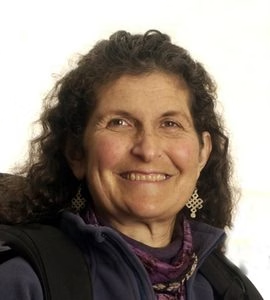
Arlene Blum in 2003, 25 years after the Annapurna expedition. Photograph by Penni Gladstone / Wikimedia Commons, CC BY-SA 4.0. Unmodified.


