

“Who was Bikram?” is a question that new yogis often ask at the studio. “Isn’t he sort of controversial?” This post will attempt to briefly answer these questions about Bikram yoga history.
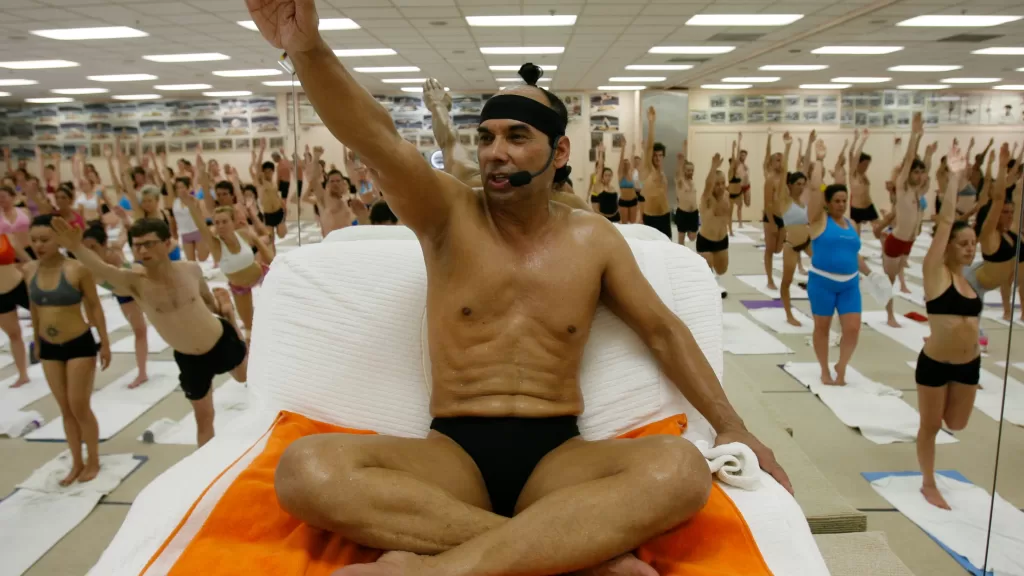
Bikram Choudhury is the founder of the hot yoga lineage (also known colloquially as “the 26”, for the 26 poses and breathing exercises that comprise it). The Bikram series is always done in the same sequence, originally for 90 minutes in a studio heated to a 105 temperature and 40% humidity.
It is a yoga routine that many swear by. It has changed, perhaps even saved, lives. Still, today, thanks to claims of maltreatment of women and of financial inconsistencies, Bikram Choudhury himself has become a controversial figure. The question comes up: what made Bikram famous? Why was he different in yoga history, which has seen many yogis come from the yoga homeland of Indian and establish followings here in America? And what was his downfall?
Bikram Choudhury was born 1944, in Calcutta, India. He is still today a yoga practitioner, guru, and once oversaw a vast network of yoga “Bikram Hot Yoga” studios. Like many star athletes, charges of financial misdeeds and sexual misconduct brought him unwanted attention and legal trouble. In 2018, a former employee successfully sued him for over 7 million dollars. He fled the United States to escape paying the debt. He has now set up operations overseas.
South Asian Genesis; East Asian Flowering
Hot yoga was “invented” by Bikram in Japan, according to his own account. He later claimed he had left India planning to introduce yoga based on the 84 yoga postures, or asanas, of Bishnu Ghosh to the Western World. Finding that Westerners could not do all the poses because of the physical limitations brought on by the “Western lifestyle,” Bikram adjusted the series to 26 postures and two breathing exercises.
Introducing heaters into the yoga rooms in Japan was a game changer, according to Bikram’s own account. He claimed it increased people’s flexibility and mimicked the climate of India. What is irrefutable is that it changed the experience of yoga. Hot yoga quickly became incredibly popular when it was introduced to LA in 1973. And Bikram Choudhury became popular along with it.
Becoming a Celebrity
Bikram appeared on TV and claimed to be guru to such luminaries as George Harrison and Richard Nixon. In LA, Bikram’s teaching skills and florid acerbic personality made him popular and mysterious, and he soon found himself hobnobbing with the rich and famous. His Beverly Hills home-ashram ran on the guru model, like Elvis’ Graceland. In fact, Bikram claimed that Elvis was one of his first students. A resident cadre of understudy yoga teachers, assistants and admirers surrounded the guru.
Bikram developed his yoga empire by licensing studios to offer his 90-minute class nationwide and in 40 other countries. But studio owners could only use the Bikram name if they had undergone a rigorous 9 week yoga training course. The course mandated that trainees do two 90-minute classes per day. Students also had to stay up until the early hours of the morning, watching Bollywood movies.
Even though this training was thought of as strenuous beyond belief, perhaps even sadistic at times, many of those who attended the training became fiercely loyal partisans of the hot practice. There was and is a mystical draw to the hot class. “Hotties” do not exactly believe themselves to be elevated beyond practitioners of more pedestrian yoga lineages, such as Vinyasa. But they do, generally, believe that the 105 degree heat changes the class, makes it more spiritual as well as physically demanding. And that hot yoga is just different.
The 60 Minute Man
Tony Sanchez was one of the teachers at the Beverly Hills Ashram who trained under Bikram. He broke with the guru and left the United States for Mexico where he set up his own yoga school. Sanchez’s signature contribution to the hot yoga tradition was a 60 minute workout using Bikram’s 26 poses.
For years, Bikram categorically refused any alternation in his formulation of the 90 minute, 105 degree, 26 pose hot yoga class. He also rejected the claim that any teacher but his own certified students could teach “the 26.” To defy Bikram about these matters, including to teach Bikram’s posture series using a 60 minute routine, was to risk a lawsuit. And in order to claim your studio practiced “Bikram” yoga, which was bankable by the early 2000’s, you had to pay licensing fees.
However, by 2016 lawsuits against Bikram began to pile up, (link is a news story from the Guardian). This included accusations of rape and sexual assault. Bikram lost control, first of the lawsuits, then of his self-named studio empire. He also lost his legal claim to have a copyright over the hot yoga pose sequence. Suddenly, hot yoga studios began using the poses without the Bikram name, and without licensing fees. Many practitioners preferred the 60 minute workout pioneered by Sanchez.
Today 60 minutes is the most common hot yoga class we have at our studio. I believe from traveling and checking in with other studios, this is so all over the country. 90 minutes is a long time, not just for “Westerners,” but for a lot of people.
The Netflix Documentary
All this scandal happening to a former darling of the press led to a much-watched and discussed 2019 Netflix documentary, “Bikram: Yogi, Guru, Predator.” Oprah picked up the story in her blog, O Daily, with a Where is Bikram Now? story. The documentary shows the background of the sexual harassment and financial wrongdoing charges. It seems clear that Bikram was guilty of misconduct. But there is a nagging doubt. Was this foreign born yogi in full awareness of his misconduct? He hailed from a country so traditional that parents still routinely arrange marriages there. In India, people still recognize caste status. Were the social and legal import of Bikram’s actions clear to him? And did his understanding matter?
Instructors or Devotees?
Those who truly invested in the hot series, particularly Bikram’s certified instructors who attended the training, are often unwilling to give up on what makes Bikram yoga special. Even if no one can quite articulate what that is. In the yoga studios where I have practiced, it is impossible for everyday yoga practitioners to deny that Bikram was guilty of something. He broke the law. He fled instead of paying for his crimes.
However, the fact remains that his 90 minute hot workout is still practiced. To some degree Bikram Hot Yoga is still seminal in the yoga world. There has been no real erasing of the Bikram way. You catch the pieces of the chant he taught his instructors, you hear, during backward bending pose, “Go back, way back, fall back, all back … ” and it’s a way for the teacher to claim their awareness of Bikram’s forty year old teaching script.
Bikram Yoga’s Longevity
As of this writing, Bikram is still teaching. The longevity of his career is indicative not just of the benefits of yoga practice but of modern life spans. And yogic practice is one athletic endeavor which invites practice well into what we used to call “retirement years.” One original Bikram yoga devotee at the Beverly Hills studio was 85, according to Benjamin Lorr’s book Hell Bent. I have no doubt that what we now call hot yoga but was originally Bikram Yoga, is bound to be part of yoga’s future for a while. Principles, as they say, above personalities. What works, works.

Pingback: Best Towel for Hot Yoga 2023? -